SAP PI/PO vs SAP Integration Suite (CPI)
SAP PI/PO is SAP's on-premise integration middleware, with SAP PO 7.5 in mainstream maintenance until the end of 2027.
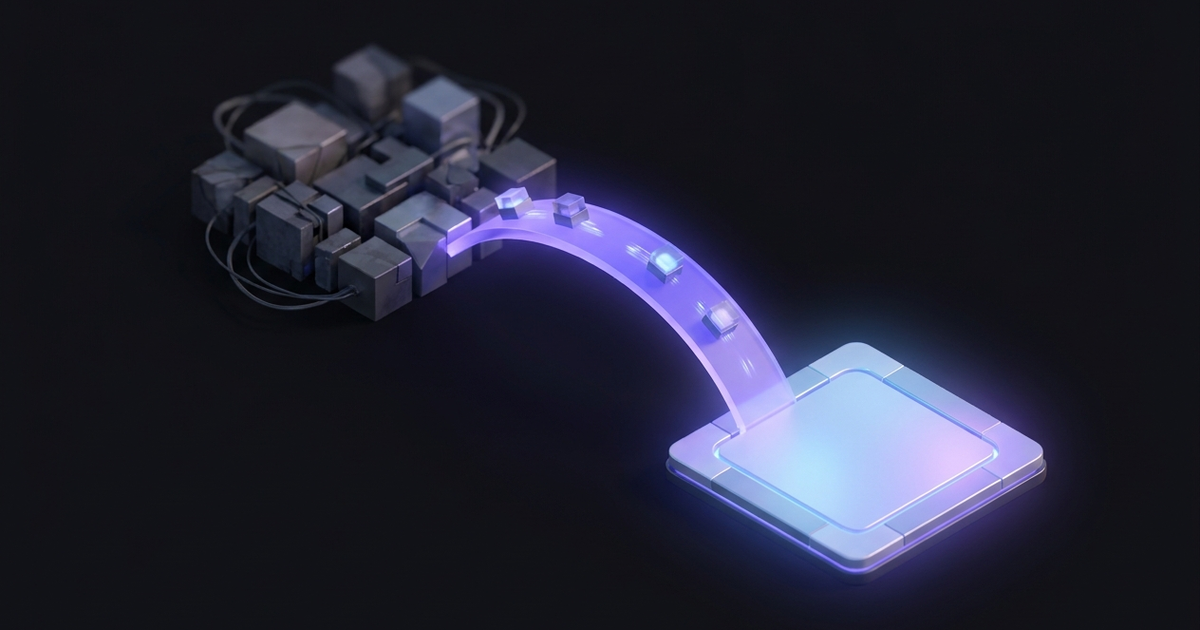
SAP PI/PO is SAP's on-premise integration middleware, with SAP PO 7.5 in mainstream maintenance until the end of 2027. SAP Integration Suite is its cloud successor on SAP BTP, adding API Management, events and continuous updates. For new work and long-term strategy, Integration Suite is the default; PI/PO remains a migration source.
How do PI/PO and Integration Suite compare?
Quick answer: PI/PO is middleware you install and operate; Integration Suite is a managed cloud service with a broader set of integration capabilities.
| Criterion | SAP PI/PO | SAP Integration Suite |
|---|---|---|
| Deployment | On-premise, customer-operated | Cloud service on SAP BTP, SAP-operated |
| Updates | Support packages you plan and apply | Continuous delivery by SAP |
| Core artefact | Integrated configuration (ICO) | Integration flow (iFlow) |
| API governance | Limited | API Management capability |
| Event-driven integration | Not a core capability | Event Mesh and advanced event mesh |
| B2B | B2B add-on | Integration Advisor and Trading Partner Management |
| Maintenance outlook | PO 7.5 mainstream to end of 2027, extended to end of 2030 | Strategic, actively developed |
When does staying on PI/PO make sense?
Quick answer: only as a transitional state while you migrate in a planned order.
- Interfaces scheduled for later migration waves, still running reliably.
- Scenarios tied to systems that are themselves being replaced soon.
- Periods of business freeze where change risk must be minimised.
Do not start new integration development on PI/PO unless there is a compelling, documented reason.
When should I move to Integration Suite?
Quick answer: for all new integrations, and for existing ones in priority waves well before the end of mainstream maintenance.
- New SaaS, partner and S/4HANA integrations, especially S/4HANA Public Cloud.
- Interfaces that need API governance, events or modern security.
- Estates where operating on-premise middleware is a cost and skills burden.
What actually changes for the team?
Quick answer: the build model is similar, but operations, transports and security move to cloud practices.
Developers move from Enterprise Services Repository and Integration Directory objects to iFlows built in a browser. Java mappings and adapter modules often become Groovy scripts or are simplified. Monitoring shifts to the Integration Suite monitor and SAP Cloud ALM. Transports move to SAP Cloud Transport Management or CTS+. Security material such as credentials and certificates lives on the tenant. Plan training and standards for all of this, not just the conversion.
How do I make the move safely?
Use Migration Assessment to categorise every interface, convert supported patterns with migration tooling, rebuild the rest, test equivalence with realistic data and cut over under change control. The step-by-step migration guide covers each stage.
Key takeaways
- Integration Suite is SAP's strategic successor to PI/PO.
- SAP PO 7.5 mainstream maintenance ends in 2027; extended maintenance to 2030.
- Migration Assessment and tooling turn the move into a planned programme.
Questions
Is SAP PI/PO being discontinued?
SAP has stated mainstream maintenance for SAP Process Orchestration 7.5 until the end of 2027, with extended maintenance available until the end of 2030. Integration Suite is the strategic successor.
Can I reuse PI/PO mappings in Integration Suite?
Graphical message mappings can usually be reused, and migration tooling converts supported integrated-configuration patterns. ccBPM or NW BPM processes and custom adapter modules usually need redesign.
Do I have to migrate everything at once?
No. Most organisations migrate in waves by business priority and run both platforms in parallel during the transition.
Related reading

See what Spanovix would fix in your landscape
Bring your hardest interfaces. In a short working session we show where the agents cut failures, manual work and risk for your teams.